


Ontario Budget 2026
What the 2026 Ontario Budget Means for Your Wallet and Your Business
If you live or run a business in Ontario, the provincial budget released on March 26, 2026 includes several changes that could affect your taxes, your home purchase, and your bottom line. Whether you are a small business owner, a home buyer, or an investor, there are a few measures worth paying attention to in this year's budget.
Here is a breakdown of the biggest highlights and what they could mean for you.
Tax Break for Small Businesses
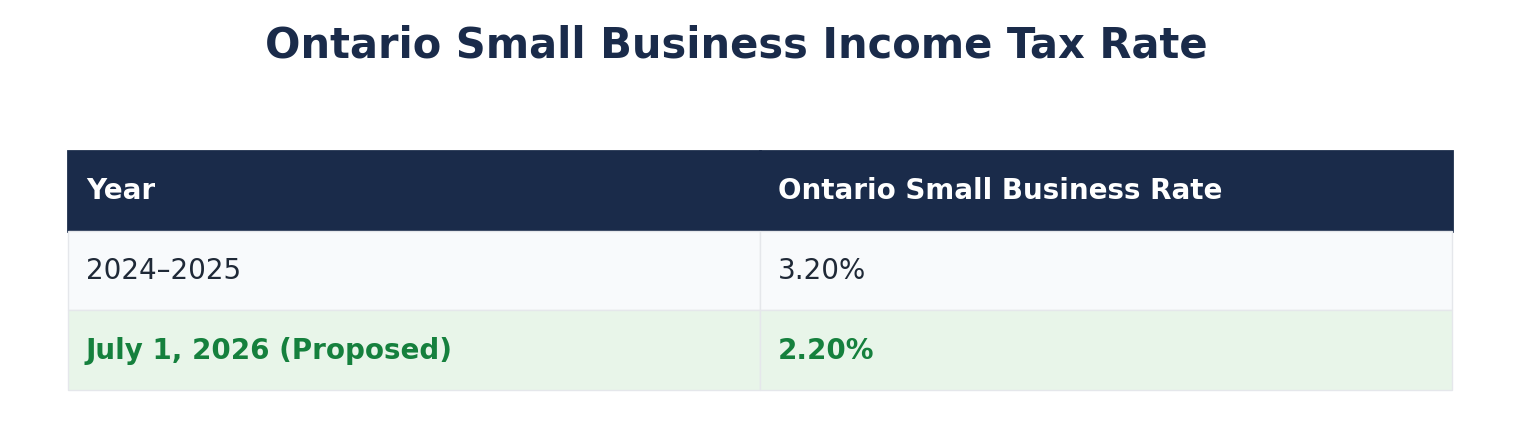
One of the biggest changes in this budget is a proposed cut to Ontario's small business corporate income tax rate. The rate would fall from 3.2% to 2.2%, effective July 1, 2026. That is a reduction of more than 30%, and it applies to the first $500,000 of active business income earned by eligible small Canadian-controlled private corporations.
For a small business earning $500,000 in eligible income, that could mean savings of up to $5,000 per year. Because the change takes effect mid-year, the rate would be prorated for taxation years that straddle July 1, 2026.
For business owners who are managing rising costs or looking to invest in growth, that kind of savings could make a meaningful difference. It may also help free up cash for hiring, equipment purchases, or day-to-day operations.
Here is how the Ontario small business rate compares:
Here is a look at Ontario's corporate income tax rates, with the small business rate reflecting the proposed change:
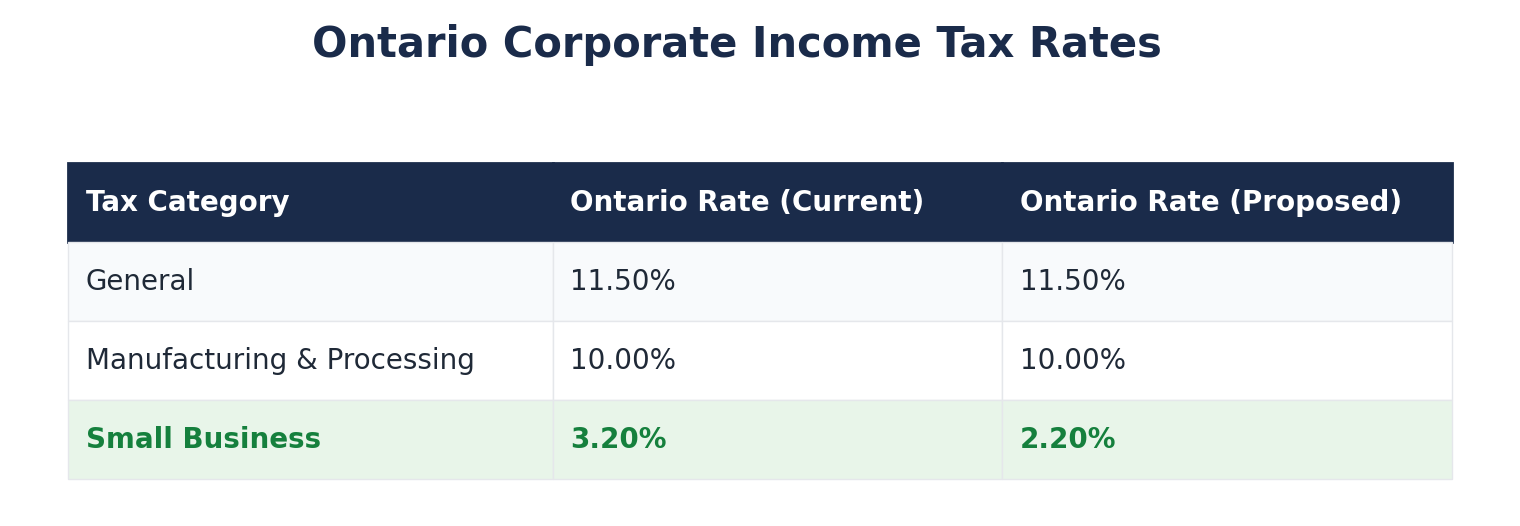
Small business rate applies to the first $500,000 of active business income. The proposed 2.2% rate takes effect July 1, 2026. Combined federal and provincial rates will vary depending on your specific situation — your accountant can confirm the exact figures for your business.
Non-Eligible Dividends
If you receive non-eligible dividends, or if you own a corporation and pay yourself dividends, there is another change to note. Ontario is proposing to reduce the non-eligible dividend tax credit rate from 2.9863% to 1.9863%, effective January 1, 2027.
This change is linked to the lower small business corporate tax rate. In general, when corporate tax rates fall, dividend tax credit rates are adjusted to reflect the change in after-tax corporate income.
The budget does not directly state combined top marginal rates, but the effect of reducing the dividend tax credit is that the tax you owe on non-eligible dividends would increase. If dividends are part of your income strategy, it may be worth reviewing how this could affect your overall tax picture.

More Flexibility for Employee Benefit Plans
If you offer employee benefits through a funded benefit plan, Ontario is proposing a change that could improve cash flow. Starting April 1, 2026, funded benefit plans would be able to elect to be treated as unfunded plans for Insurance Premium Tax purposes.
In practical terms, that means the tax would be triggered when benefits are paid out rather than when contributions are made into the plan. If you sponsor a benefit plan, it may be worth checking whether this election is useful for your business.
Faster Write-Offs for Business Equipment
The budget also proposes accelerated deductions for depreciable assets, in parallel with changes announced by the federal government. Ontario says these measures would lower the cost of investing in a broad range of assets, and they would take effect following the passage of federal legislation.
For business owners considering major purchases, faster deductions can improve cash flow by allowing more of the cost to be deducted sooner rather than spread over several years.
The budget also proposes to let the Regional Opportunities Investment Tax Credit expire effective January 1, 2027, with expenditures incurred on or before December 31, 2026 still eligible.
Keeping Costs Down for Families
Beyond tax changes, the budget includes several measures aimed at easing everyday costs for Ontario families. The Ontario Electricity Rebate continues, the Ontario One Fare Program is being extended for another two years, and tolls on the provincially owned portion of Highway 407 East have been removed.
Ontario says the One Fare extension could save daily transit users in the Greater Toronto and Hamilton Area up to $1,600 per year, while the Electricity Rebate continues to reduce electricity bills for households.
The budget also includes support for families and individuals through a range of spending measures in health care, education, and social programs.
HST Relief for New Home Buyers
If you are thinking about buying a new home or condo, the budget includes a major temporary expansion of Ontario's housing rebates. Ontario is proposing to provide further relief for eligible buyers of new homes by removing the full 13% HST on qualifying new homes valued up to $1 million, subject to federal legislation. The maximum rebate amount would be maintained for homes valued up to $1.5 million.
The federal government has agreed to cost-share, subject to the passage of federal legislation, to cover the federal 5% portion being removed. The enhanced rebate is proposed to apply from April 1, 2026 to March 31, 2027.
Here is a quick look at what the proposed rebate change could mean depending on your home's value:
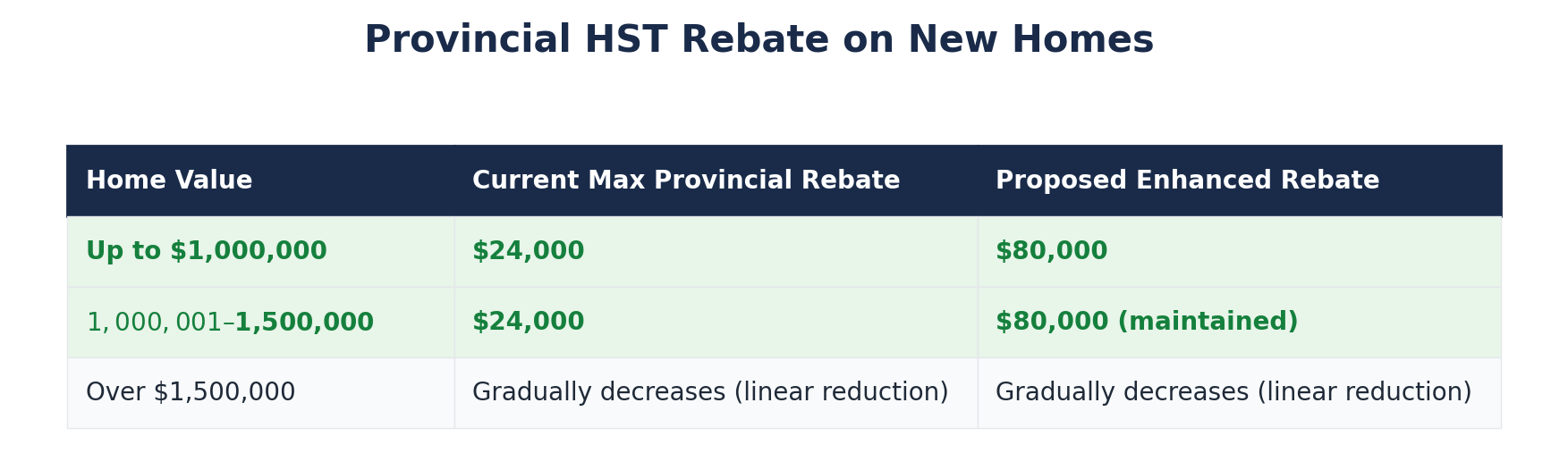
The budget also proposes to eliminate the provincial HST New Housing Rebate and the New Residential Rental Property Rebate after the enhancement period ends, with further transitional details to be set out later.
Ontario is also proposing to align its first-time home buyer rebate with the federal GST/HST First-Time Home Buyers' Rebate. These changes require federal regulatory changes, and Ontario says it will continue working with the federal government to support implementation. Under the proposal, the rebate would apply to agreements of purchase and sale entered into on or after March 20, 2025 and before 2031.
The Big Picture
Ontario is projecting planned capital investments of more than $210 billion over 10 years, including $37 billion in 2026–27. The province says these investments will support highways, hospitals, transit, and other infrastructure across Ontario.
At the same time, the budget is being framed as part of the province's response to tariffs and broader economic uncertainty.
What This Means for You
This budget touches a wide range of financial decisions. If you own a small business, you may want to review your tax strategy in light of the lower corporate rate and accelerated deductions. If you are a first-time home buyer or considering a new build, the enhanced HST rebate could create a valuable but time-limited opportunity. If you receive non-eligible dividends, the tax credit change beginning in 2027 is something to plan for now.
Every situation is different, so the best next step is to review these changes and see which ones apply to you.
Sources
Ontario Ministry of Finance, 2026 Ontario Budget: A Plan to Protect Ontario — Highlights – https://budget.ontario.ca/2026/highlights.html
Ontario Ministry of Finance, Annex: Details of Tax Measures and Other Legislative Initiatives – https://budget.ontario.ca/2026/annex.html
This content is provided for general informational purposes only. It is not intended to provide investment, tax, or legal advice, and should not be relied upon as such.